Introduction
Walking into a large company for the first time, the org chart can feel like alphabet soup — VP, SVP, Director, GM — and it’s rarely clear what actually separates these titles in practice. Understanding corporate hierarchy isn’t just useful for navigating office politics; it directly affects how decisions get made, who approves what, and where your career path could realistically go. This guide breaks down each level clearly.
Why Corporate Hierarchy Exists in the First Place
Corporate hierarchy structure exists to create clear accountability and decision-making pathways as a company grows beyond what a single person can manage directly. Without it, larger organizations would struggle with unclear ownership over decisions and results.
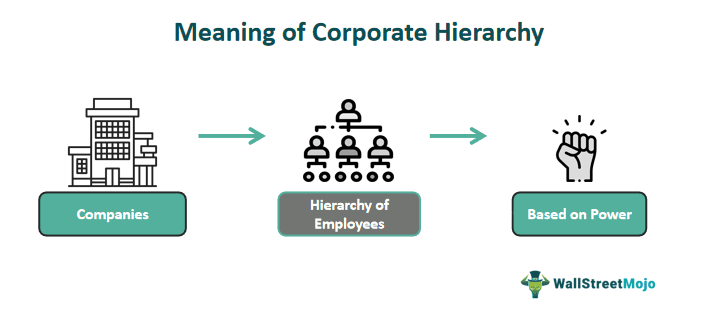
Quick answer: Corporate hierarchy is the structured system of authority levels within a company that defines who reports to whom, how decisions are approved, and how responsibility flows from senior leadership down to entry-level employees.
Level 1: Board of Directors and CEO
At the very top sits the Board of Directors, responsible for high-level oversight and strategic direction, with the CEO as the highest-ranking executive responsible for translating that strategy into actual company operations.
Level 2: C-Suite Executives (CFO, COO, CMO, CTO)
Reporting directly to the CEO, C-suite executives each own a specific function — finance, operations, marketing, technology — and are responsible for setting strategy within their domain while staying aligned with overall company direction.
Level 3: Senior Vice Presidents and Vice Presidents
VPs typically oversee a significant business unit or major function, translating C-suite strategy into department-level execution. In larger companies, Senior VPs sit between C-suite and regular VPs, often overseeing multiple related departments.
Level 4: Directors
Directors manage multiple teams or a significant sub-function within a department, bridging the gap between high-level strategy from VPs and the day-to-day execution happening at the manager level.
- Directors typically manage 3-8 managers or team leads
- Responsible for departmental budgets and resource allocation
- Report performance metrics upward to VPs regularly
Level 5: Managers and Team Leads
Quick answer: Managers within corporate hierarchy are responsible for direct oversight of individual contributors, translating departmental goals into specific team tasks, conducting performance reviews, and serving as the primary point of contact between senior leadership and frontline employees.
This is often where the most direct impact on day-to-day employee experience happens, since managers shape team culture and workload distribution.
Level 6: Individual Contributors and Entry-Level Employees
The foundation of corporate hierarchy, individual contributors execute the actual work — whether that’s writing code, closing sales, or handling customer support. Career growth typically moves from this level toward team lead, then manager, and upward through the structure.
Flat vs Traditional Hierarchies
Not all companies follow this traditional pyramid structure. Many startups and tech companies adopt flatter corporate hierarchy models with fewer management layers, aiming for faster decision-making and more direct communication between leadership and individual contributors.
[link to related guide on corporate governance basics here]
How Decisions Flow Through Corporate Hierarchy
Major strategic decisions typically flow top-down from the board and C-suite, while operational feedback and on-ground insights flow bottom-up from individual contributors through managers to leadership — when this flow breaks down in either direction, companies often struggle with either poor strategy or poor execution.
How to Navigate Corporate Hierarchy for Career Growth
Understanding where decision-making power actually sits helps you figure out who to build relationships with for career advancement. It’s rarely just about performing well in your current role — visibility to the right level of leadership matters significantly too.
FAQs
Q1: What’s the difference between a Director and a VP in corporate hierarchy? Directors typically manage day-to-day departmental execution and multiple manager-level reports, while VPs set broader strategy for an entire business unit or major function.
Q2: How many levels of corporate hierarchy does a typical large company have? Most large companies have 5-7 levels, from entry-level to CEO, though this varies significantly by company size and industry.
Q3: Are flatter corporate hierarchies better than traditional ones? It depends on the company’s size and needs — flat structures enable faster decisions in smaller organizations but can become chaotic as headcount grows significantly.
Q4: How long does it typically take to move up one level in corporate hierarchy? This varies widely, but 2-4 years per level is a common benchmark in traditional corporate structures, faster in high-growth companies.
Q5: Does corporate hierarchy affect salary more than skill level? Both matter, but hierarchy level is usually the stronger predictor of base salary bands, since compensation structures are typically tied to organizational level.
Q6: Can you skip levels in corporate hierarchy when getting promoted? It’s uncommon but does happen, typically for exceptional performers or when a company restructures and consolidates certain levels.
Conclusion
Understanding corporate hierarchy structure gives you more than just clarity on org charts — it helps you understand how decisions actually get made and where you need to build influence to grow your career. Whether your company follows a traditional pyramid or a flatter modern structure, knowing how authority and accountability flow through the organization makes you more effective at every level.
Suggested Alt Text: “Corporate hierarchy org chart showing levels from CEO to entry-level employees”