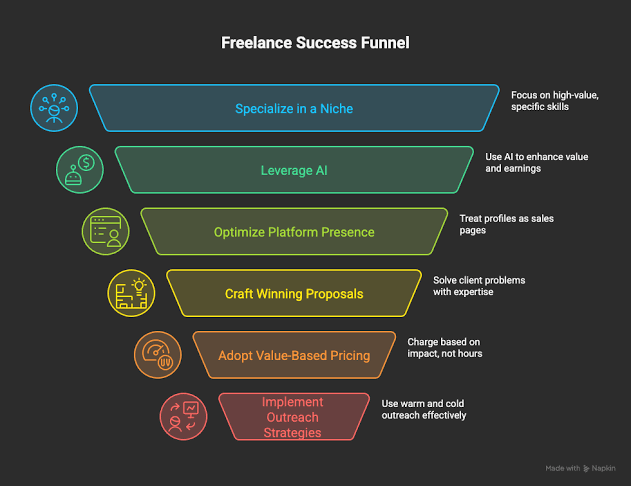
Introduction
Setting your freelance rates is one of the most anxiety-inducing parts of running an independent business — price too high and you fear scaring clients away, price too low and you end up overworked and resentful. This freelance pricing guide breaks down how to price your services with actual confidence, based on real value rather than guesswork or fear.
Why Underpricing Hurts More Than It Helps
Quick answer: Underpricing your freelance services often backfires by attracting price-sensitive clients who are more likely to negotiate further, demand extra revisions, and churn quickly, while also making it significantly harder to raise your rates with those same clients later on.
Low prices don’t guarantee more work — they often just guarantee lower-quality client relationships.
Hourly vs Project-Based Pricing
Hourly pricing feels safer for beginners since it directly ties income to time spent, but it can penalize efficiency — the faster and better you get, the less you effectively earn per project. Project-based pricing, once you understand your typical time investment for a given deliverable, usually rewards skill and speed more fairly.
Step 1: Calculate Your True Minimum Rate
Start by determining your minimum viable hourly rate: add up your monthly living and business expenses, divide by your realistic billable hours (accounting for non-billable time like admin and marketing), and you get the absolute floor you need to charge just to sustain yourself.
Step 2: Research Market Rates in Your Niche
- Check freelance platforms and industry salary surveys for your specific skill and experience level
- Look at rates for specialists in your niche, not just generalists in your broader field
- Factor in your specific experience level and portfolio strength relative to market averages
Quick answer: Researching market rates means understanding the typical pricing range for your specific skill, niche, and experience level, giving you a realistic anchor point rather than pricing purely based on guesswork or what feels comfortable emotionally.
Step 3: Price Based on Value, Not Just Time
For experienced freelancers, value-based pricing — charging based on the business impact or outcome you deliver, rather than hours spent — typically commands significantly higher rates than hourly pricing, especially for high-impact work like conversion copywriting or strategic consulting.
Step 4: Build in Buffer for Revisions and Scope Creep
Many freelancers underprice by not accounting for the inevitable revision rounds and small scope additions that happen during almost every project. Build reasonable revision limits and buffer time into your pricing structure from the start.
[link to related guide on how to find freelance clients here]
Step 5: Know How to Raise Your Rates Confidently
Quick answer: Raising freelance rates is best done gradually and confidently, typically applying new rates to new clients immediately while giving existing clients advance notice (30-60 days) before a rate increase takes effect, framing it around your growing expertise and results rather than apologizing for the change.
Step 6: Avoid Common Pricing Traps
- Competing purely on price against much lower-cost freelancers globally
- Offering unlimited revisions without any cap, which erodes your effective hourly rate
- Discounting immediately when a client pushes back, rather than explaining your value first
- Never reviewing or adjusting rates as your skills and portfolio genuinely improve over time
How to Present Pricing to Clients Confidently
State your rate clearly and directly, without over-explaining or apologizing for the number. Confidence in how you present pricing significantly affects how clients perceive your expertise — hesitant, apologetic pricing conversations often invite more negotiation than straightforward ones.
FAQs
Q1: Should I charge hourly or project-based rates as a freelancer? Project-based pricing generally rewards efficiency and expertise better once you understand your typical time investment, though hourly can work well for ongoing, variable-scope work.
Q2: How often should I raise my freelance rates? Reviewing and potentially raising rates annually, or after significant skill or portfolio growth, keeps your pricing aligned with your actual current value.
Q3: What if a client says my rates are too high? This is often a normal part of negotiation — explain the specific value and outcomes you deliver rather than immediately discounting, and be willing to walk away if the client genuinely can’t afford your minimum viable rate.
Q4: How do I figure out what to charge as a complete beginner freelancer? Start with market research for your specific niche and experience level, then calculate your minimum viable rate as a floor, adjusting upward as you gain experience and testimonials.
Q5: Is it okay to charge different rates for different clients? Yes, this is common and reasonable, particularly based on project complexity, urgency, or the specific value delivered to different types of clients.
Q6: How do I transition from hourly to value-based pricing? Start by tracking outcomes and results you deliver for hourly clients, then use that data to build project-based or value-based proposals for new clients going forward.
Conclusion
This freelance pricing guide comes down to one core principle: price based on genuine value and sustainable business math, not fear of losing clients. Calculate your true minimum rate, research your market honestly, and build the confidence to communicate your pricing clearly without over-apologizing. Freelancers who price confidently and consistently tend to attract better clients and build far more sustainable businesses than those chasing the lowest possible rate to win work.
Suggested Alt Text: “Freelancer calculating pricing rates and reviewing a rate sheet on a laptop”