Introduction
Every founder eventually hits the same wall: you know you need money to grow, but the world of startup funding stages feels like a maze of acronyms and investor jargon. Should you be raising a seed round or is it too early? What’s the difference between Series A and Series B, really? This guide breaks down each funding stage in plain language, so you know exactly what investors expect and how much you should realistically be raising at your current stage.
Pre-Seed: Turning an Idea Into Something Fundable
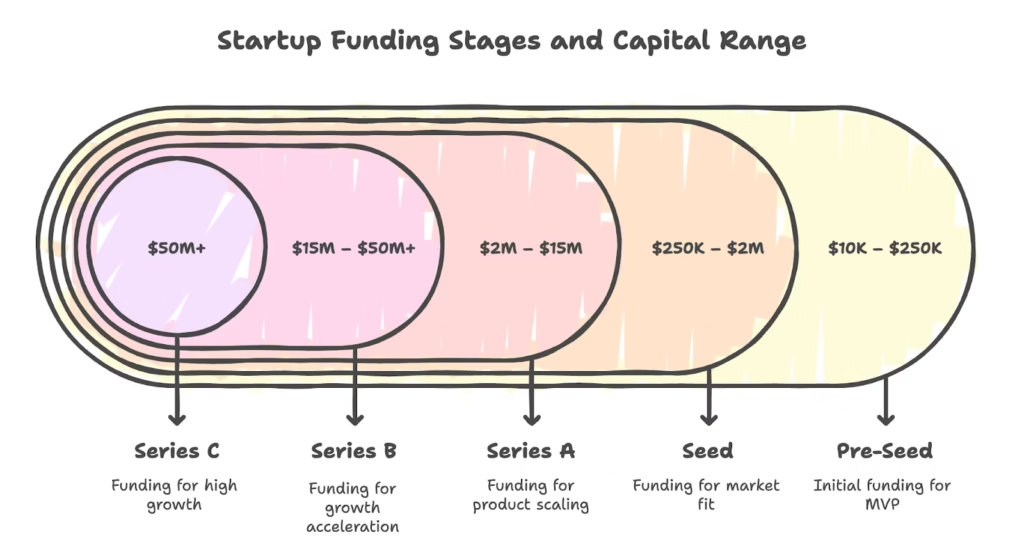
Pre-seed is usually the founder’s own money, friends, family, or an accelerator program. At this stage, you likely don’t even have a working product yet — just a strong idea, maybe a prototype, and a founding team investors believe can execute.
Typical pre-seed amounts in India range from ₹10 lakh to ₹1 crore, often used purely to build an MVP and validate the idea with a small group of real users.
Seed Stage: Proving the Idea Works
By seed stage, you should have some proof — even if it’s just 100 loyal early users or a working prototype with initial traction. This is where angel investors and early-stage VC funds come in.
Quick answer: A seed round is the first significant institutional funding a startup raises, typically ₹1-8 crore in India, used to build out the product properly and find product-market fit before scaling.
Investors at this stage care less about revenue and more about growth signals — user retention, engagement, and how fast you’re learning from feedback.
Series A: Scaling What Works
Series A is where things get serious. You need a working business model, a clear go-to-market strategy, and usually consistent month-over-month revenue growth of 15-20%.
This round typically ranges from ₹15-75 crore in the Indian startup ecosystem, and VCs will dig deep into your unit economics — customer acquisition cost, lifetime value, and churn rate all matter a lot more here than at seed.
Series B: Expanding the Business Model
At Series B, the question shifts from “does this work” to “how big can this get.” Companies raising Series B are usually expanding into new markets, building out leadership teams, or scaling operations significantly.
- Revenue is typically well-established and predictable
- Hiring accelerates across sales, marketing, and operations
- Investors expect a clear path to profitability, not just growth
Startup funding at this stage often comes from larger VC firms and sometimes growth equity funds, with rounds ranging from ₹75 crore to several hundred crore depending on the sector.
Series C and Beyond: Preparing for Scale or Exit
By Series C, a startup is usually a proven business looking to dominate its market, expand internationally, or prepare for an eventual IPO or acquisition. Investors here include private equity firms and hedge funds, not just traditional VCs.
Quick answer: Series C funding is typically raised by startups that are already profitable or near-profitable, used for major expansion like acquisitions, international entry, or new product lines rather than basic survival.
How Much Should You Actually Raise?
A common mistake founders make across all startup funding stages is raising more than they need just because investors offer it. A good rule of thumb: raise enough to hit your next major milestone with 6 months of runway buffer, not 3 years of theoretical growth.
[link to related guide on startup valuation methods here]
Red Flags Investors Watch For at Every Stage
Founders who can’t clearly explain their unit economics, who show inconsistent monthly numbers, or who have high founder turnover tend to struggle at every subsequent funding stage — investors talk to each other more than founders realize.
FAQs
Q1: What’s the difference between seed funding and Series A? Seed funding is about proving your idea has potential; Series A is about proving your business model actually works and can scale profitably.
Q2: How long does it typically take to close a funding round? Anywhere from 3 to 6 months from first investor meeting to money in the bank, though it can stretch longer in a tough funding environment.
Q3: Do I need revenue to raise a seed round? Not always — but you need strong evidence of demand, like user growth, engagement, or a compelling pilot with paying customers.
Q4: What percentage of the company should I give up at each stage? Typically 10-20% per round, though this varies widely based on valuation and negotiating leverage.
Q5: Can a startup skip straight to Series A without seed funding? It’s possible if the founders are well-known or the idea is exceptionally strong, but it’s uncommon — most startups go through each stage sequentially.
Q6: What happens if a startup fails to raise its next round? Many pivot to a “bridge round” from existing investors, cut costs to extend runway, or in some cases, get acquired earlier than planned.
Conclusion
Understanding startup funding stages isn’t just about knowing the terminology — it’s about knowing exactly what milestone you need to hit before approaching investors at each level. Don’t chase a funding stage label; chase the specific proof points that stage requires. Get those right, and the right investors tend to find you, not the other way around.
Suggested Alt Text: “Founder pitching startup funding stages to investors on a whiteboard”